Delhi Pollution: AQI Quality of Delhi
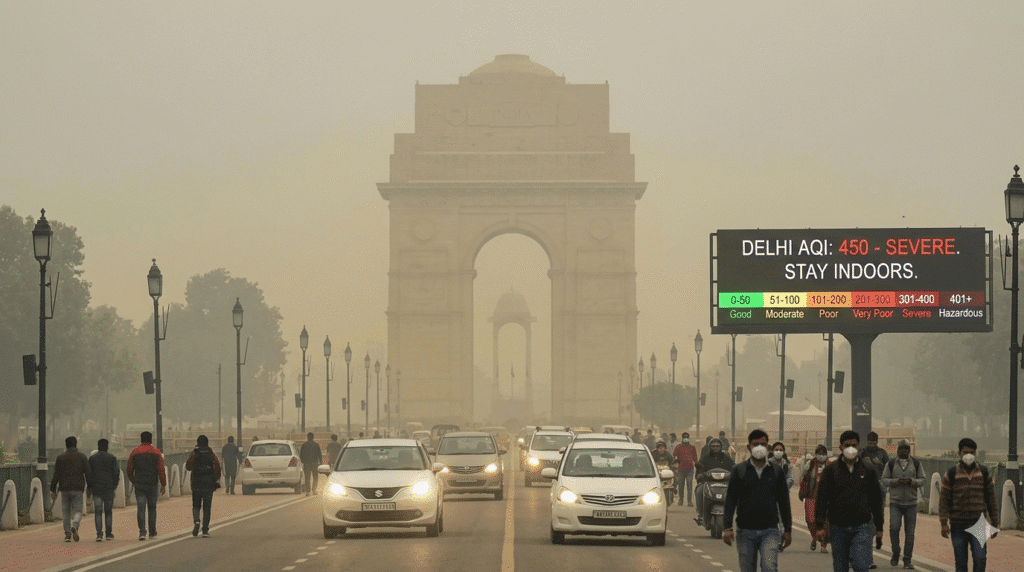
Delhi Pollution: AQI Quality of Delhi
Poor air quality directly harms the body. In fact, long-term exposure can be dangerous.
- Breathing problems
- Asthma
- Eye irritation
- Skin issues
- Lung damage
Especially, children and older people are at higher risk.
Delhi pollution is not a new issue, but the Delhi AQI is now reaching severe levels, making the air dangerous to breathe. Moreover, the air quality index Delhi is getting worse day by day, and it is directly affecting health, lifestyle, and productivity.
In this blog, you will understand AQI, current pollution conditions, causes, and simple ways to stay safe.
Introduction
What is Delhi AQI (Air Quality Index Delhi)?
AQI means Air Quality Index. It shows how clean or polluted the air is. In simple terms, the higher the AQI number, the more harmful the air becomes.
AQI Levels
- 0–50 (Good): Safe air
- 51–100 (Satisfactory): Minor discomfort
- 101–200 (Moderate): Breathing issues
- 201–300 (Poor): Health issues start
- 301–400 (Very Poor): Serious problems
- 401–500 (Severe): Dangerous for everyone
In Delhi, AQI often goes above 300, especially in winter.
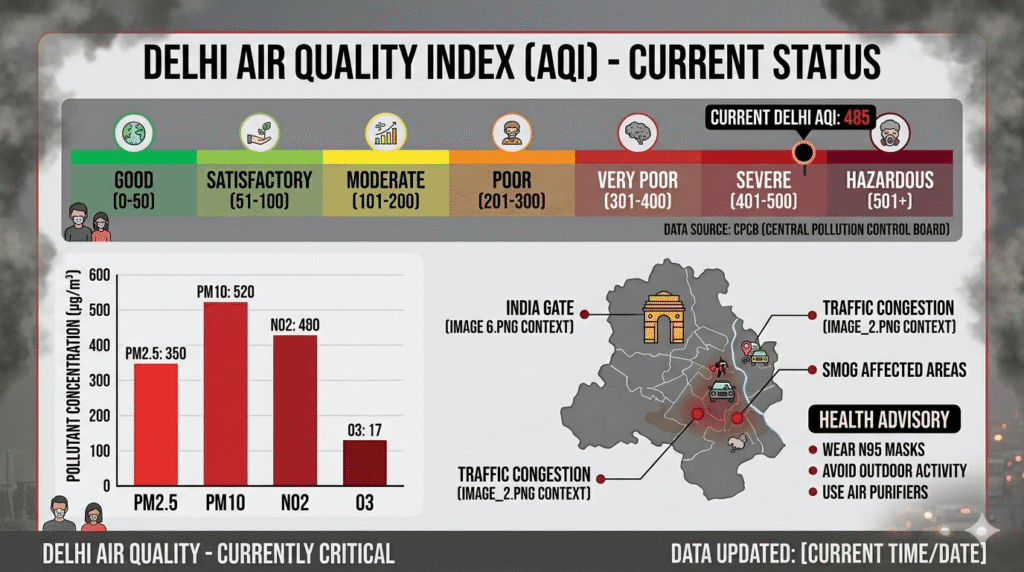
Current Delhi AQI and Air Quality Index Delhi Status
Delhi AQI changes daily, but most of the time it stays in poor to severe category. This happens because winter conditions trap pollutants in the air.
Why Delhi AQI Gets Worse in Winter
- Cold air traps pollutants
- Low wind speed
- Increase in vehicle emissions
- Stubble burning
- As a result, people face breathing problems, eye irritation, and fatigue.
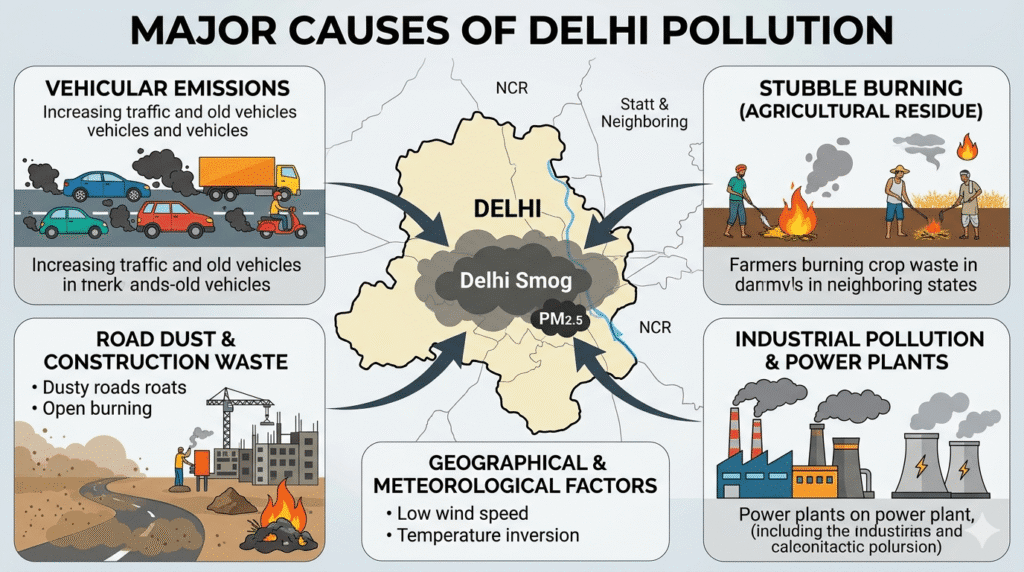
Major Causes of High Delhi AQI
1. Vehicle Emissions Impact on Delhi AQI
Delhi has a huge number of vehicles. Therefore, smoke from them increases pollution.
2. Industrial Pollution and Delhi AQI Levels
Factories release harmful gases. Moreover, this continuously raises AQI levels.
3. Construction Dust Increasing Delhi AQI
Construction creates dust particles. As a result, air quality becomes worse.
4. Stubble Burning and Delhi Air Pollution
Farmers burn crop waste. Because of this, smoke spreads to Delhi.
5. irecrackers Effect on Delhi AQI
During festivals, pollution rises suddenly. For example, Diwali increases AQI sharply.
Health Effects of Poor Delhi AQI
Poor air quality directly harms the body. In fact, long-term exposure can be dangerous.
- Breathing problems
- Asthma
- Eye irritation
- Skin issues
- Lung damage
Especially, children and older people are at higher risk.
How to Protect Yourself from High Delhi AQI
1. Check AQI Daily
First, check Delhi AQI before going outside.
2. Use Masks
Next, wear N95 masks to filter harmful particles.
3. Avoid Outdoor Activities
Then, avoid going out during peak pollution hours.
4. Use Air Purifiers
Also, improve indoor air quality using purifiers.
5. Eat Healthy
Finally, eat fruits and vegetables to boost immunity.
Conclusion on Delhi AQI and Air Pollution
The government takes steps like odd-even rules and construction bans. However, pollution control still needs public support.
Conclusion
Delhi pollution is a serious issue, and Delhi AQI levels show how critical the situation has become. Therefore, awareness and daily precautions are necessary.